

Bilateral gangrenous myositis in a bovine carcass
An inquiry was submitted about a 3-year-old bovine carcass (Charolais) that arrives at the slaughterhouse. It did not present any abnormalities on the ante-mortem inspection, while the post-mortem examination detected abscessing hepatitis, so the liver was declared unfit for human consumption. However, in the meat cutting room, a lesion was detected in both pieces of the hind limb located in the semitendinosus muscle, presenting a dark color and a strong odor, which were considered unfit for consumption. Samples were submitted to the SESC for diagnosis.
The muscle samples received present multifocal darkened, hemorrhagic and edematous areas, often surrounded by whitish tissue indicative of fibrosis. Histopathology of the samples was performed, which revealed a chronic-active necrotizing (gangrenous) myositis, composed of lytic necrosis with abundant bacterial colonies (positive to Gram stain), surrounded by abundant fibrous tissue. When the microbiological culture of the lesions was performed, abundant colonies of Trueperella pyogenes and Clostridium perfringens were isolated and identified.
These muscle lesions could be suggestive of blackleg (infection by Clostridium chauvoei), as it is the most common cause of gangrenous muscle necrosis in cattle. However, in this case, the typical emphysema that occurs with this pathogen was not seen, nor was its presence detected. On the other hand, the presence of other pathogens in the lesion was detected, which although not common in the muscle, would explain the observed lesions. The most common route of entry is through wounds or injections, but the bilateral presence in this case makes the latter unlikely. In fact, the muscles indicated for the injection are those of the neck, since the thigh muscles are more valuable.
The information of the affected cattle was traced and it was discovered that it comes from an animal dedicated to reproduction, which due to low productivity, inappetence, weakness and apathy, was destined for slaughter. In the herd there were Berrenda breed cows that could have attacked the male and produced bilateral wounds in the thigh. Other possibilities contemplated are a metastatic embolism origin, but they would not explain the observed bilateral distribution either. (AC)

Section of the affected musculature. Cavities with necrotic material surrounded by inflamed muscle are observed.
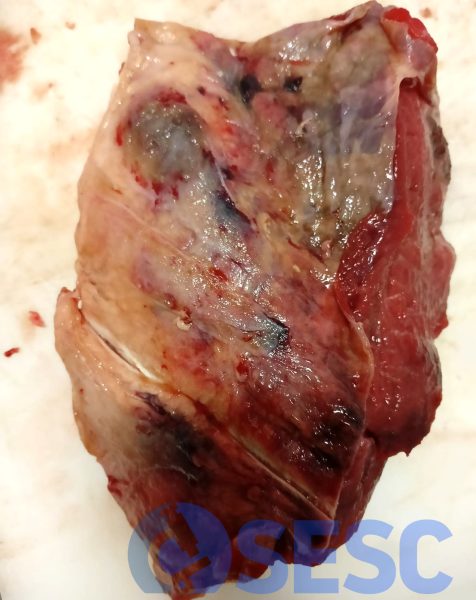
Another section of affected muscle. In this case, hardened and whitish areas are observed due to extensive fibrosis.
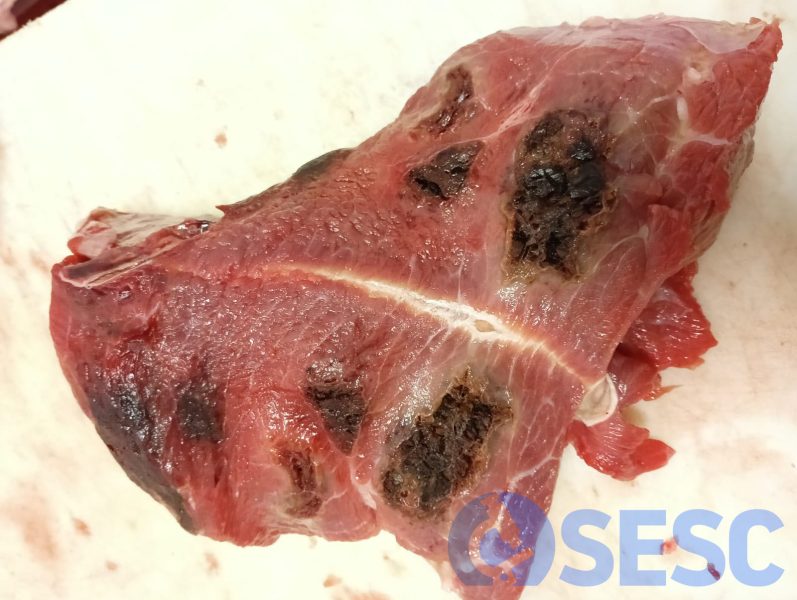
Another section of affected muscle.

Liver with abscessing hepatitis.